
Few events herald the arrival of the holiday season quite like the Macy’s Thanksgiving Day Parade. Since its inception in 1924, this parade has evolved into a vibrant celebration broadcast to millions of viewers nationwide, signaling the start of Thanksgiving in homes across the United States. The annual spectacle turns New York City’s streets into a floating stage, where giant balloons, dazzling floats, and live performances come together in a carefully choreographed procession. Beyond entertainment, the parade represents a fusion of history, branding, and creativity—a mirror reflecting changes in American culture and media, year after year.
The Evolution and Significance of the Parade
From Humble Beginnings to National Phenomenon
The Macy’s Thanksgiving Day Parade began as a modest event organized by Macy’s employees to showcase the famous department store. The first parade featured live animals from the Central Park Zoo, simple floats, and Santa Claus ushering in the holiday shopping season. Over time, the parade grew in scale and complexity, attracting larger crowds and becoming a staple of holiday traditions nationwide.
Today, the parade is a multi-hour event, nationally televised and watched by approximately 50 million viewers each year. Its reach extends beyond Thanksgiving Day, shaping holiday advertising strategies and providing a platform for Broadway shows, musicians, and brands to share the spotlight.
“The Macy’s Thanksgiving Day Parade is more than entertainment; it’s an enduring piece of Americana, blending nostalgia, spectacle, and community spirit,” says parade historian Robert Grippo.
Cultural Impact and Iconic Moments
Notable for introducing characters and stories into the nation’s holiday lexicon, the parade has showcased everything from classic cartoon figures to contemporary pop icons. Over the years, scenes such as the first appearance of Snoopy or the dazzling Rockettes’ routine have become indelible parts of Thanksgiving memories for generations.
Beyond these beloved moments, the parade serves as a barometer for American pop culture, evolving each year to reflect current trends and societal shifts. This dynamic nature keeps it relevant and eagerly anticipated—even as traditions change.
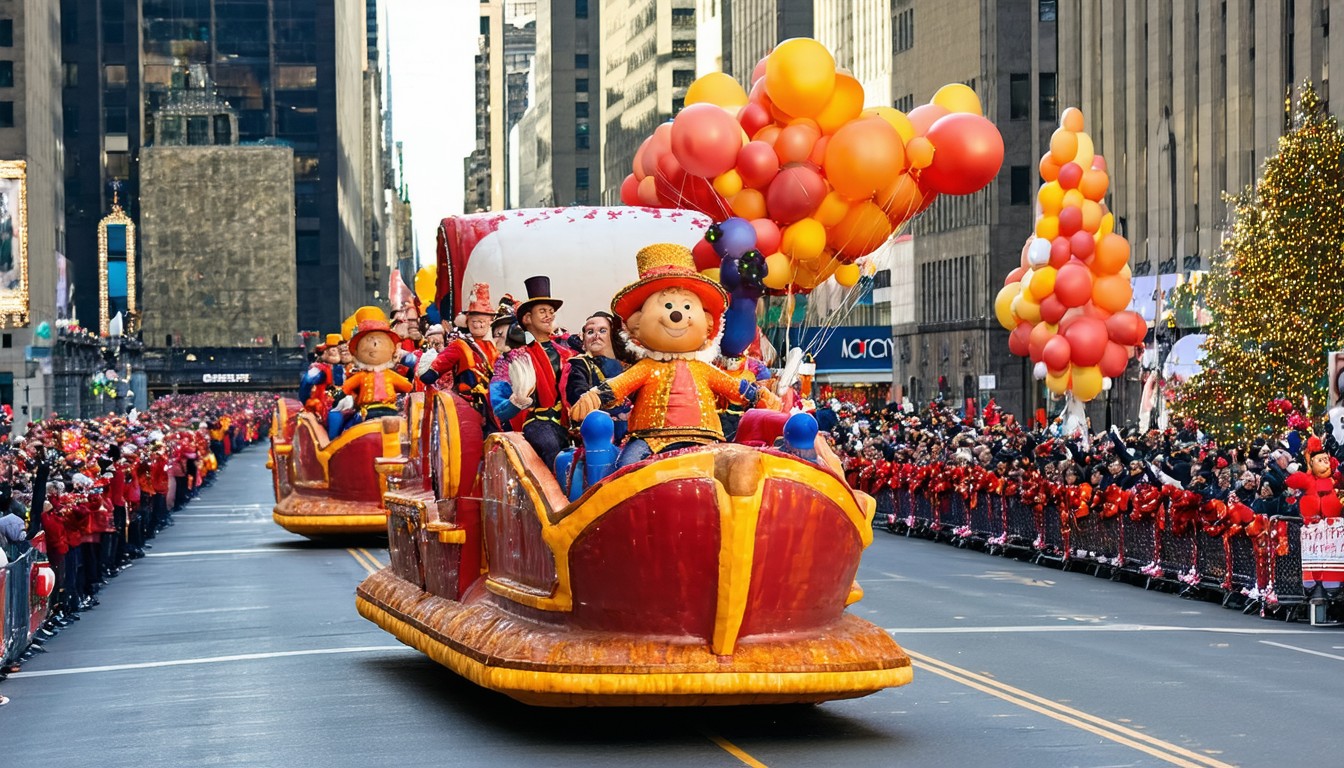
Floats: From Gilded Carriages to Modern Marvels
Behind the Scenes: Design and Engineering
Each float in the Macy’s Thanksgiving Day Parade is a feat of engineering, blending artistry with logistics. Months of design and construction precede the parade, with teams of artists, welders, and puppeteers bringing fantastical concepts to life. The floats, some spanning up to 50 feet in length, are built to fold and maneuver New York’s city streets—no small engineering accomplishment given their size and complexity.
Many floats are designed around themes of joy, community, and celebration, frequently sponsored by well-known brands or entertainment franchises. Corporate involvement is significant, as sponsorship not only funds much of the parade but also offers an unparalleled marketing opportunity during a family-focused event.
Memorable Floats and Their Stories
Standouts from recent parades include the “Blue Sky Gallery” series, which brings famous contemporary artists’ work to life, and floats inspired by hit films or TV shows. For instance, the “Tom Turkey” float, often credited as the parade’s unofficial mascot, delights audiences year after year with fresh, animated features. New floats are often paired with live performances, creating immersive experiences that resonate both in person and on television.
Balloons: Iconic Characters Soaring Above Manhattan
The Making of a Giant Balloon
The towering balloons—a core feature since 1927—have become the parade’s most recognizable symbol. Early versions, constructed from rubber and air, have given way to massive helium-filled wonders, some requiring as many as 90 handlers to navigate city winds. Each new balloon represents hundreds of hours of sketching, sculpting, and testing before its maiden flight down Sixth Avenue.
Famous Balloons Through the Years
Few images are as synonymous with the parade as Snoopy floating above the crowd, joined by ever-popular characters like Pikachu, Spider-Man, and SpongeBob SquarePants. These helium giants, measuring up to five stories high, are carefully chosen and often tied to contemporary pop culture phenomena. The process for balloon selection is part industry strategy, part cultural barometer—ensuring each parade provides a mix of nostalgia and newness.
On occasion, balloons have made headlines for the unexpected: sudden bursts of wind sending handlers scrambling, or weather conditions forcing last-minute changes. Such moments underscore the technical prowess required to stage such an event in the heart of a bustling city.
Performances: Broadway, Bands, and Magic on Parade
A National Stage for Live Entertainment
Alongside floats and balloons, live performances form the parade’s heartbeat. Each year, Tony Award-winning Broadway casts, top-charting musicians, and renowned marching bands from across the nation take center stage. This blend of genres and talents offers something for everyone and highlights significant trends in live entertainment.
For Broadway, the parade is an opportunity to perform for millions—often debuting sneak previews of the season’s hottest musicals. Marching bands and cheer squads, selected through a highly competitive process, enjoy a once-in-a-lifetime moment on a national stage, contributing youthful energy and musical diversity to the experience.
Notable Performances and Audience Reactions
From pop sensations like Kelly Clarkson and John Legend to beloved staples like the Radio City Rockettes, each performance is carefully selected to balance mainstream appeal and artistic excellence. In recent years, the parade has embraced diversity in its line-up, mirroring evolving audience expectations and national conversations.
A defining memory for many viewers is the annual finale, when Santa Claus makes his highly anticipated appearance, signaling the official start of the holiday season.
The Parade Route and Viewing Tips
Navigating the Manhattan Spectacle
The parade’s traditional route covers approximately 2.5 miles, beginning at Manhattan’s Upper West Side and winding down to Herald Square. Crowds line the sidewalks well before dawn, seeking the best vantage points. Public transportation is strongly recommended, as streets near the parade become closed to vehicles and heavy with foot traffic.
Veterans suggest arriving early, dressing in layers, and bringing snacks or warm beverages—particularly on cold November mornings. For many, watching the parade in person is a bucket-list experience, but millions more tune in from home, where elaborate camera work offers close-ups and unique perspectives.
Broadcast and Digital Experience
NBC’s high-production broadcast, now entering its ninth decade, provides in-depth coverage, interviews, and performances. The event is also streamed online, making it accessible to a global audience and reflecting broader shifts in media consumption.
Challenges and Innovations: Weathering Change
Weather, Safety, and Adaptation
Staging a live, outdoor event in late November is no small feat. Over the decades, the parade has encountered its share of challenges—from severe weather necessitating balloon groundings to safety concerns and logistical puzzles amplified by urban congestion.
Innovations in balloon design and parade management have mitigated many risks, contributing to the event’s longevity and safety record. During the COVID-19 pandemic, parade organizers adapted quickly, shifting to a no-crowd, broadcast-only event in 2020—a testament to both resilience and the importance of the tradition.
“Adapting to challenges is baked into the parade’s DNA,” notes parade producer Amy Kule. “Each year brings new twists, but the commitment to making magical memories never wavers.”
Conclusion: Looking Ahead While Honoring Tradition
For nearly a century, the Macy’s Thanksgiving Day Parade has stood as a pillar of American holiday culture—an annual reminder of creativity, community, and shared joy. The meticulous planning behind floats, the awe-inspiring design of the balloons, and the caliber of performances attest to the event’s enduring appeal. As the parade continues to evolve—embracing new technologies, celebrating diversity, and weathering unforeseen circumstances—it remains one of America’s most cherished traditions, uniting families across generations and geographies.
FAQs
What is the parade route for the Macy’s Thanksgiving Day Parade?
The parade begins on Manhattan’s Upper West Side, typically at 77th Street and Central Park West, proceeds south on Central Park West to Columbus Circle, then heads east along Central Park South before traveling down Sixth Avenue to Macy’s Herald Square.
How are the parade’s balloons and floats made?
Balloons and floats are designed months in advance by teams of artists and engineers. Balloons are created using lightweight materials and require many handlers, while floats are built for both structural integrity and imaginative storytelling.
How can I watch the parade if I’m not in New York City?
The parade is broadcast live on NBC and available on various streaming platforms. Many people watch from home to experience the broadcast’s up-close views of floats, balloons, and performances.
Who performs at the parade?
The lineup includes Broadway casts, music artists, marching bands, and dance groups. Each year’s roster blends established acts and emerging talent, offering a broad showcase of entertainment.
Is it safe to attend the parade in person?
City officials coordinate extensive safety measures, including crowd control and emergency preparedness. Arriving early and following current guidelines helps ensure a positive and secure experience.
How do brands get involved with the parade?
Brands partner with Macy’s to sponsor floats or balloons, leveraging the parade’s vast reach for high-profile exposure. These partnerships often result in creative, themed entries reflecting pop culture and brand narratives.